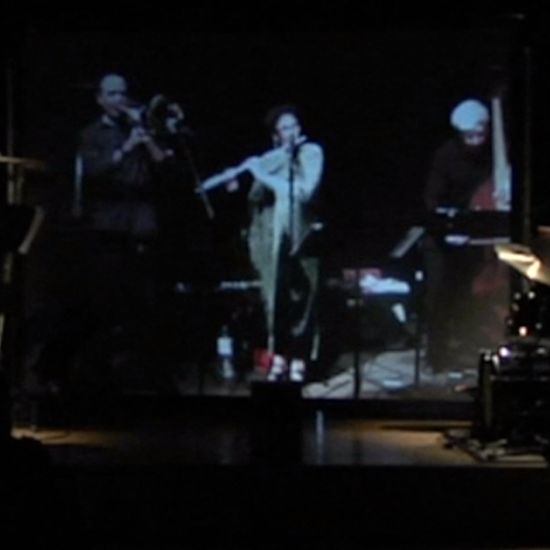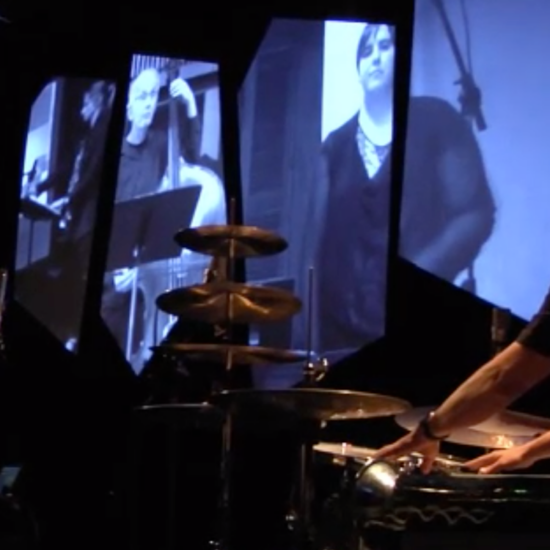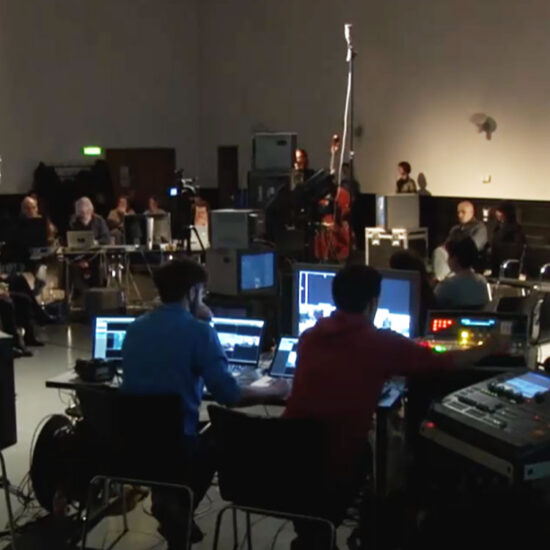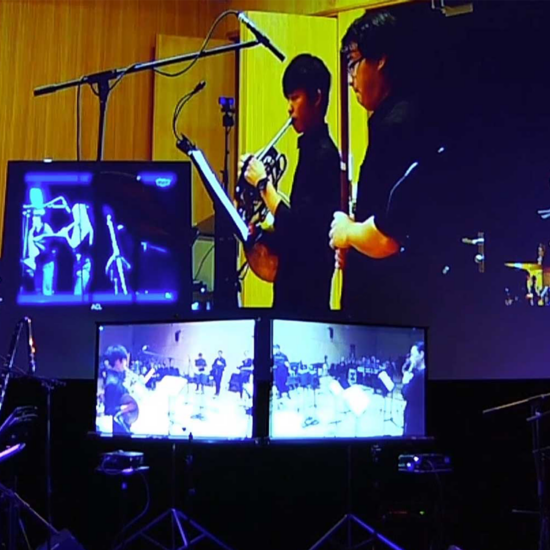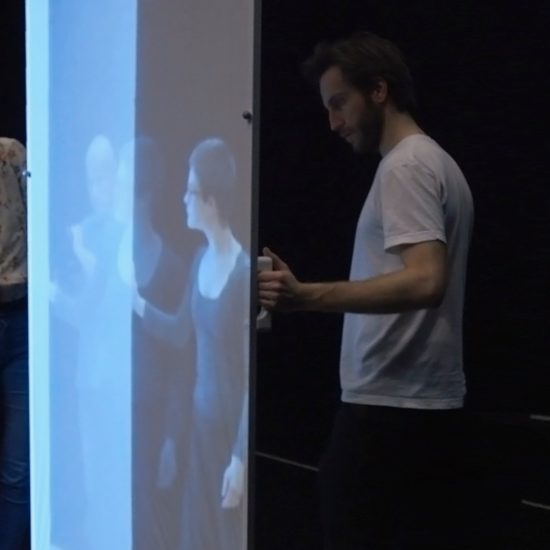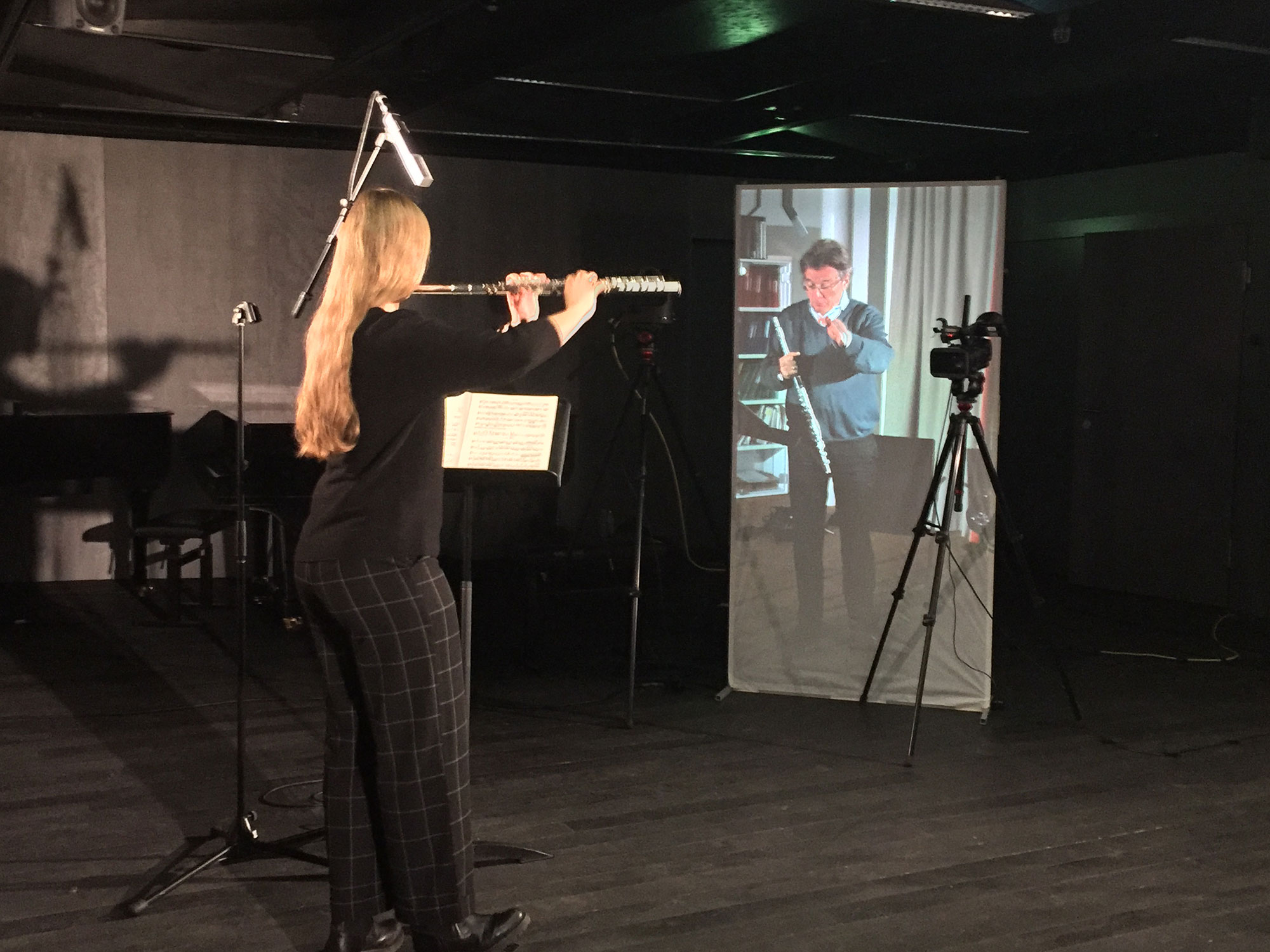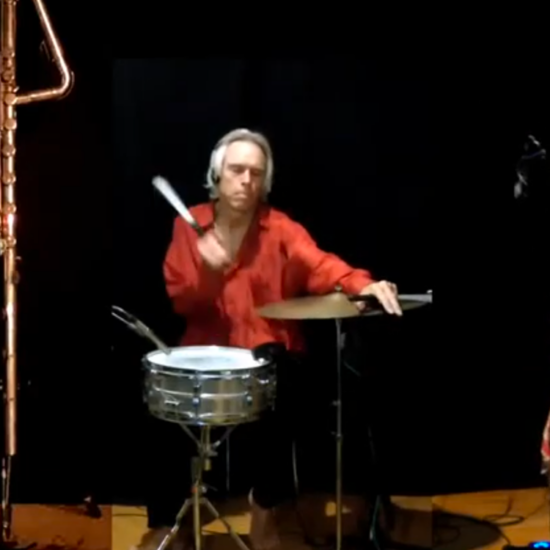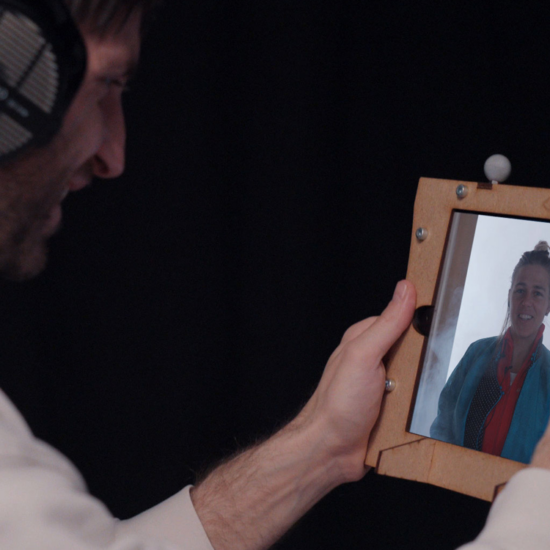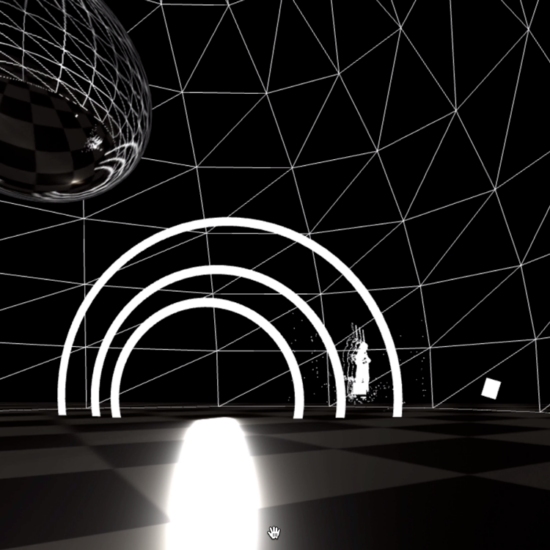
In June 2019, we explored how spatial audio could contribute to a shared musical space in telematic performance. Our experiments at the ZHdK examined two approaches: virtually positioning a remote musician’s sound, and capturing the acoustic space surrounding the performers.
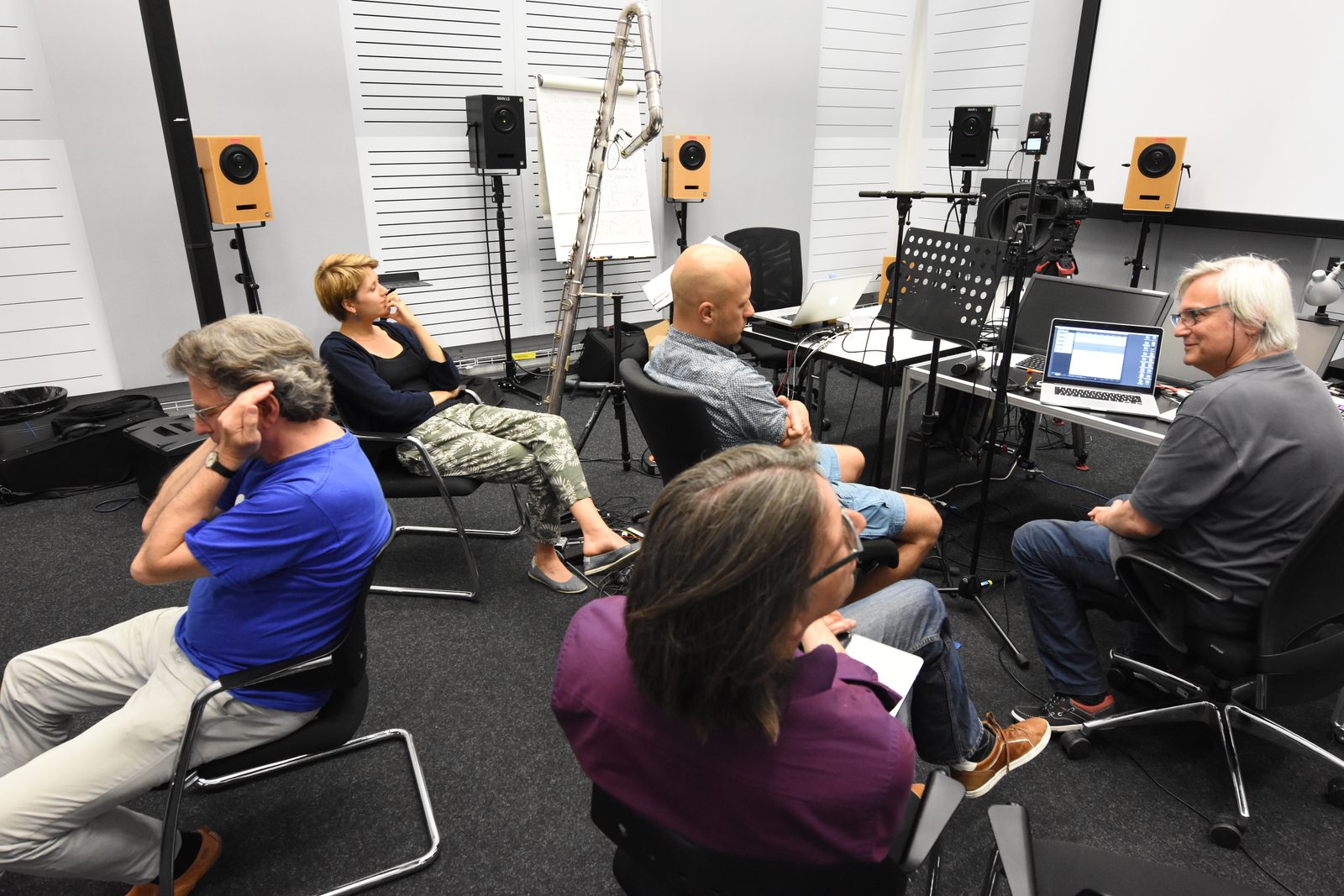
The series brought together experiment planning, technical development, musical performance and shared listening. We developed the setups together, worked through the challenges of JackTrip and Ambisonics processing, and evaluated the musical and perceptual effects through listening and discussion.
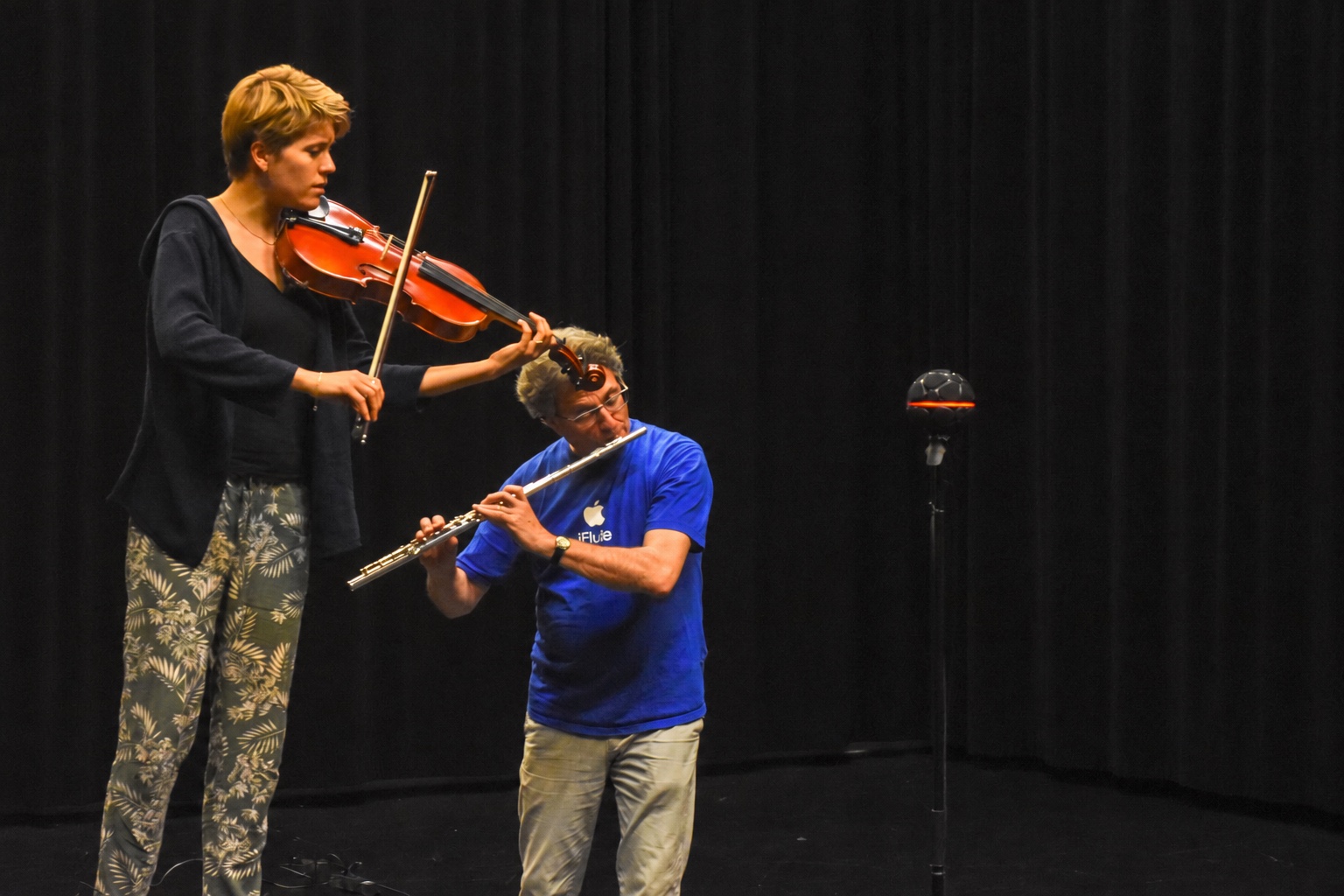
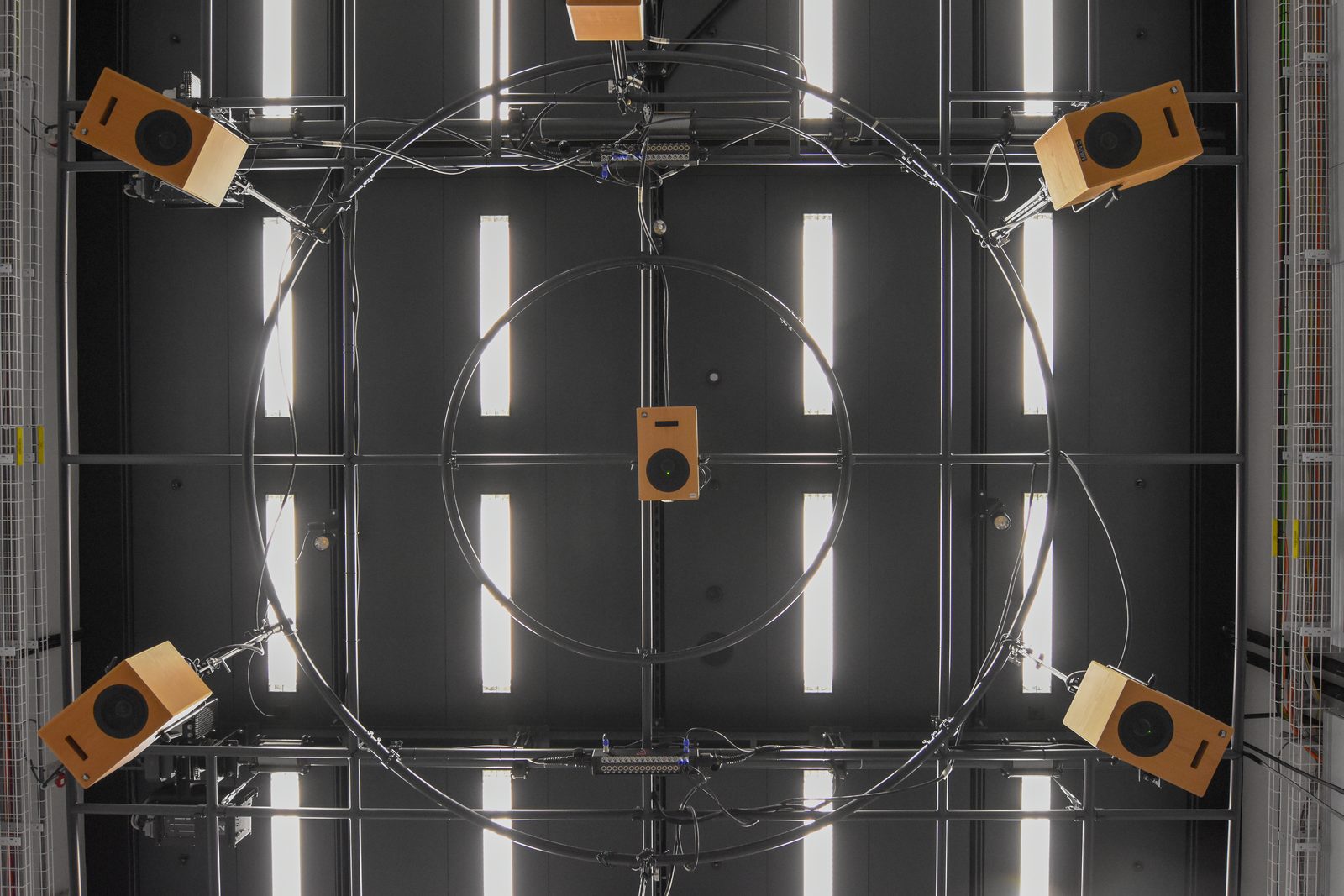
For the spatial recordings, two performers explored flute, viola and voice while changing their positions and moving through the rehearsal space. A single Zylia ZM-1 microphone array captured the sessions, which we subsequently played back in the ICST’s 3D-audio studio.
We explored how different microphone distances, room acoustics and movements shaped the listening experience. Opening and closing the rehearsal-room curtains, or moving between the room and the reverberant corridor outside, allowed us to compare contrasting acoustic conditions.
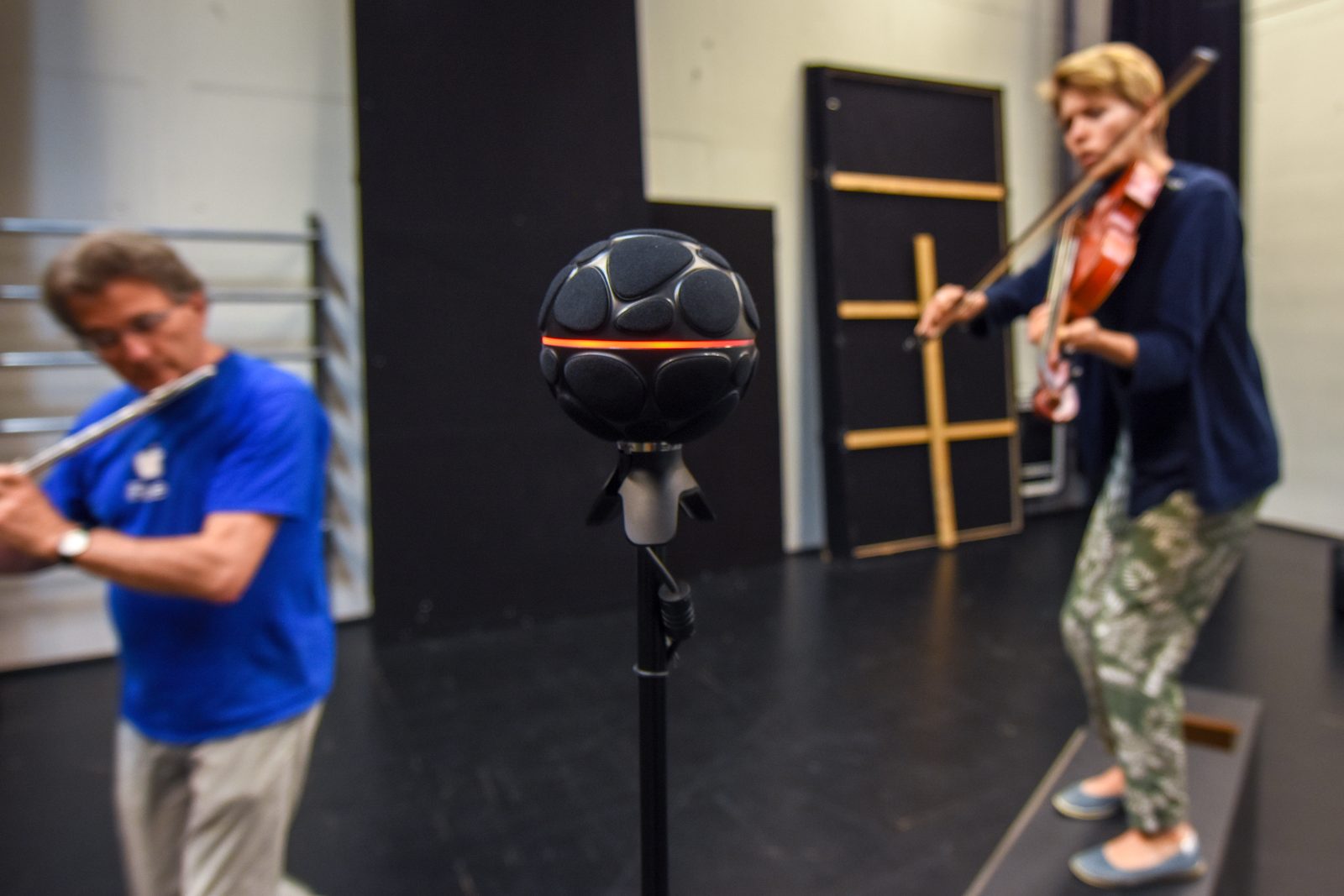
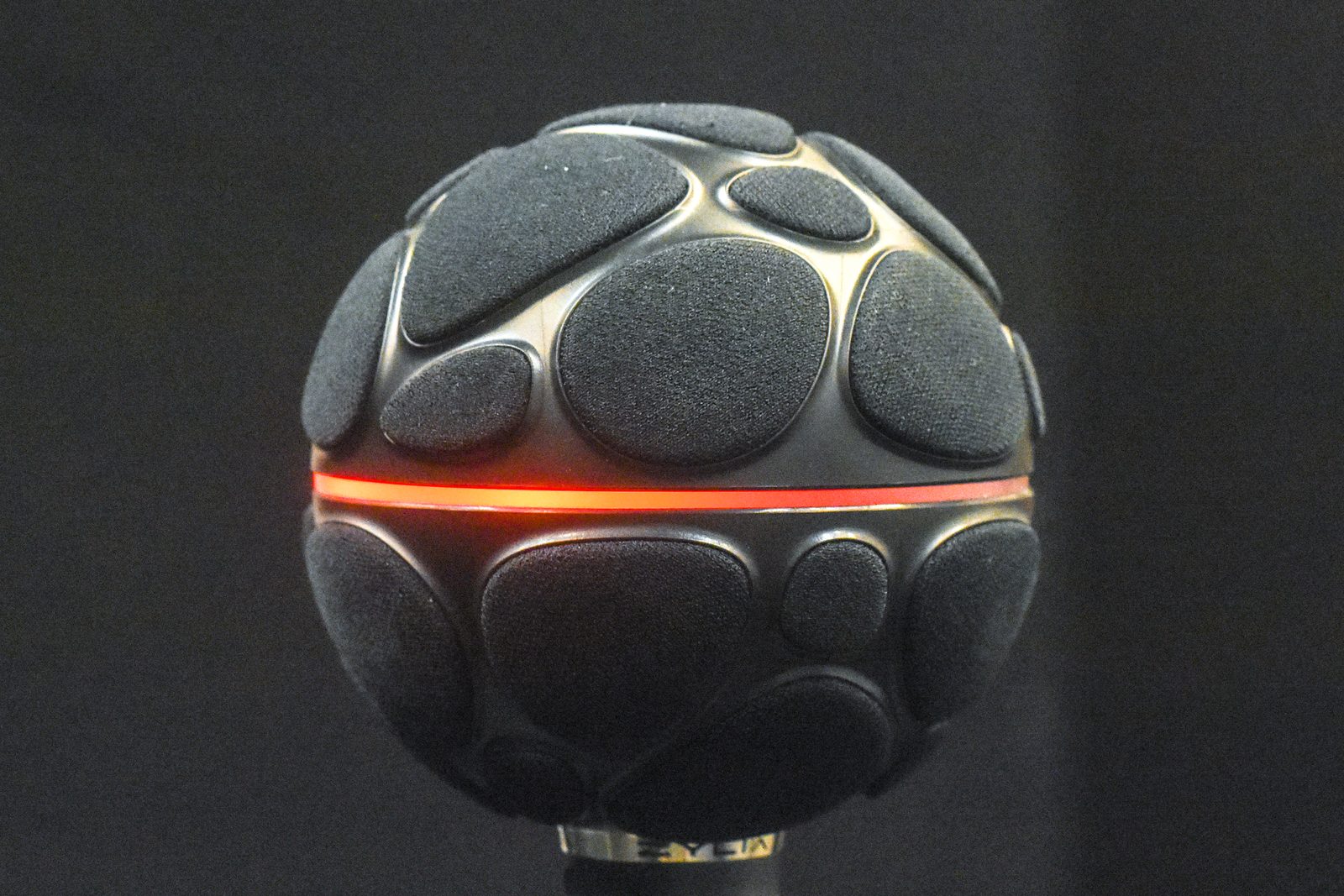
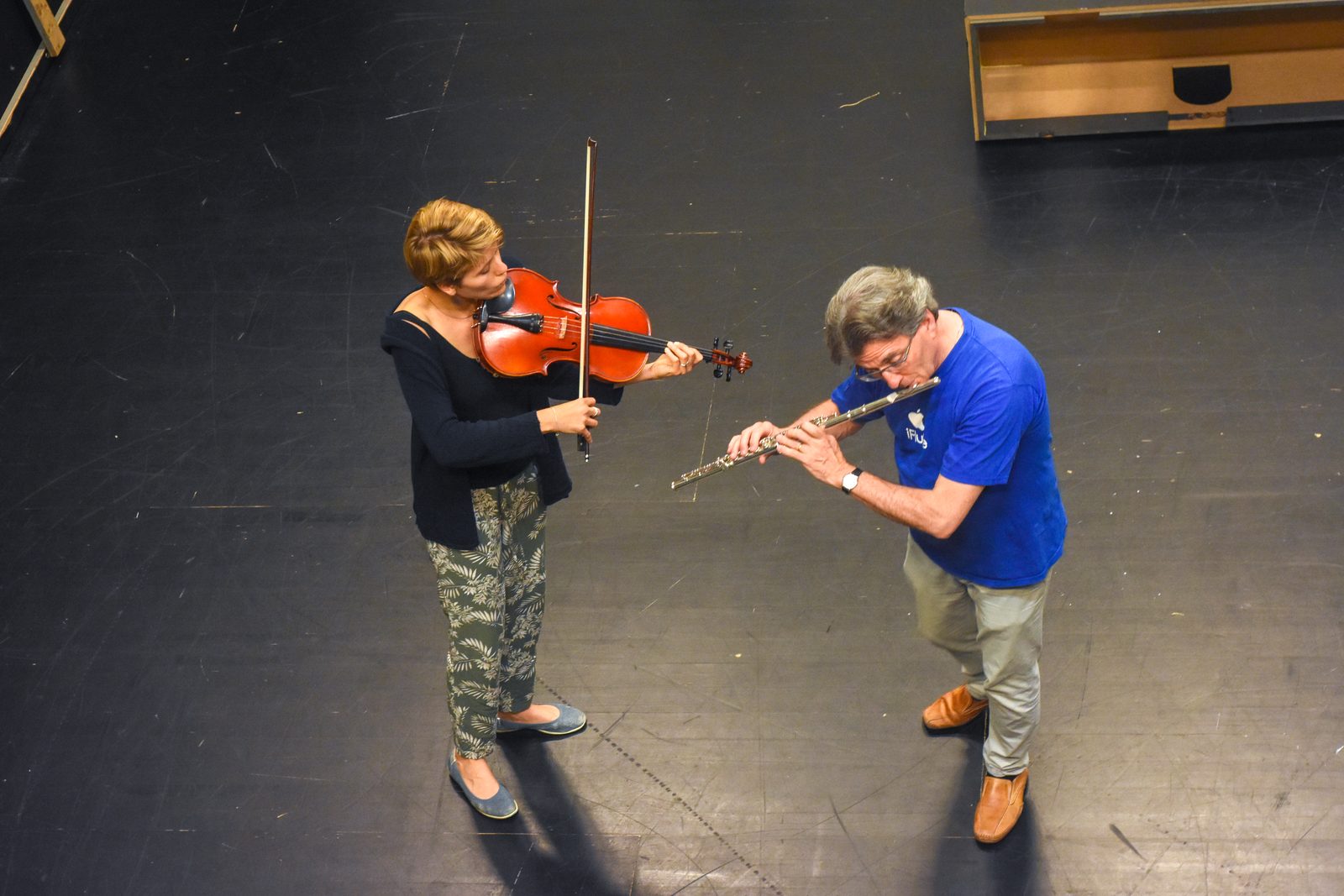
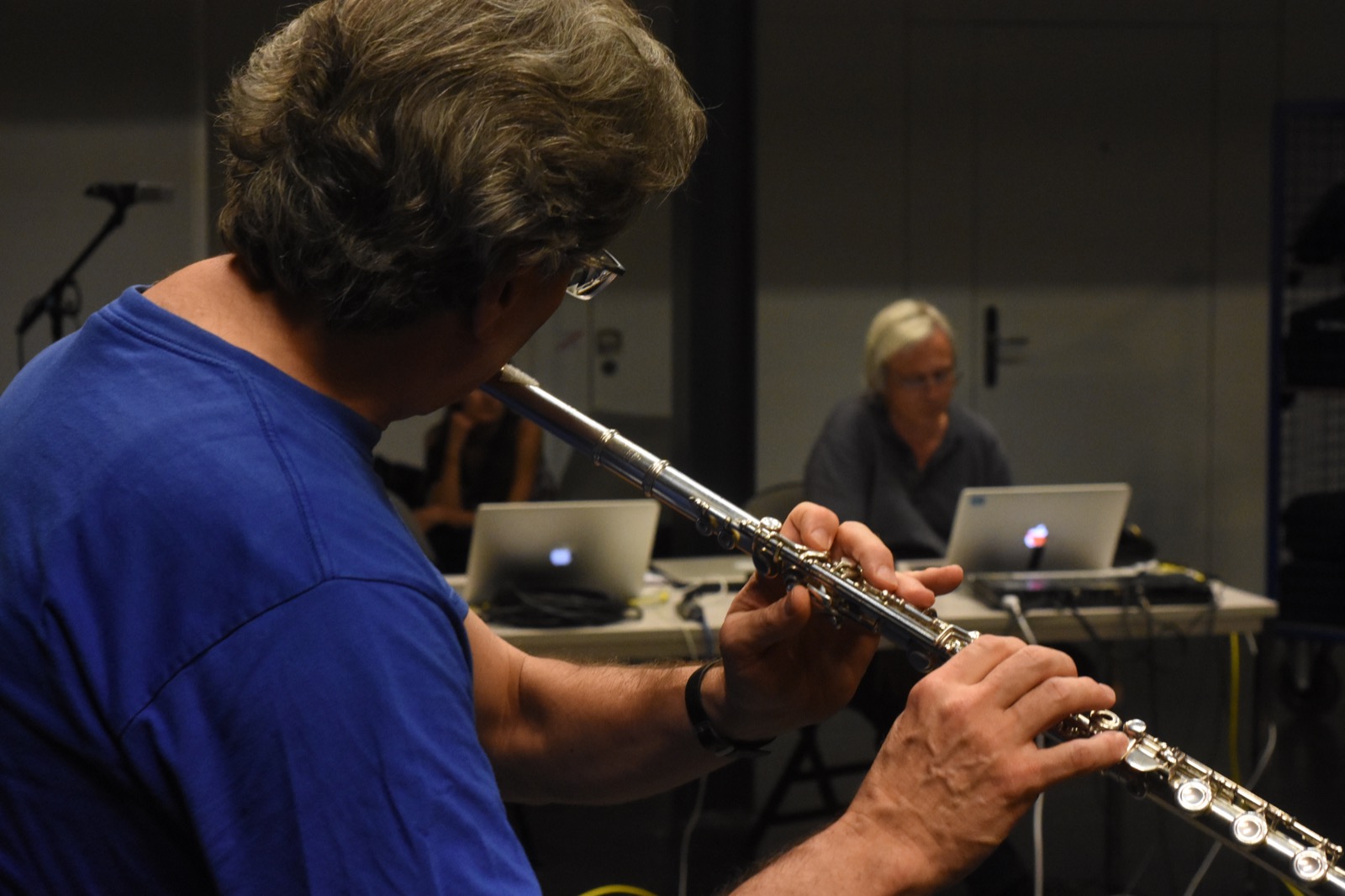
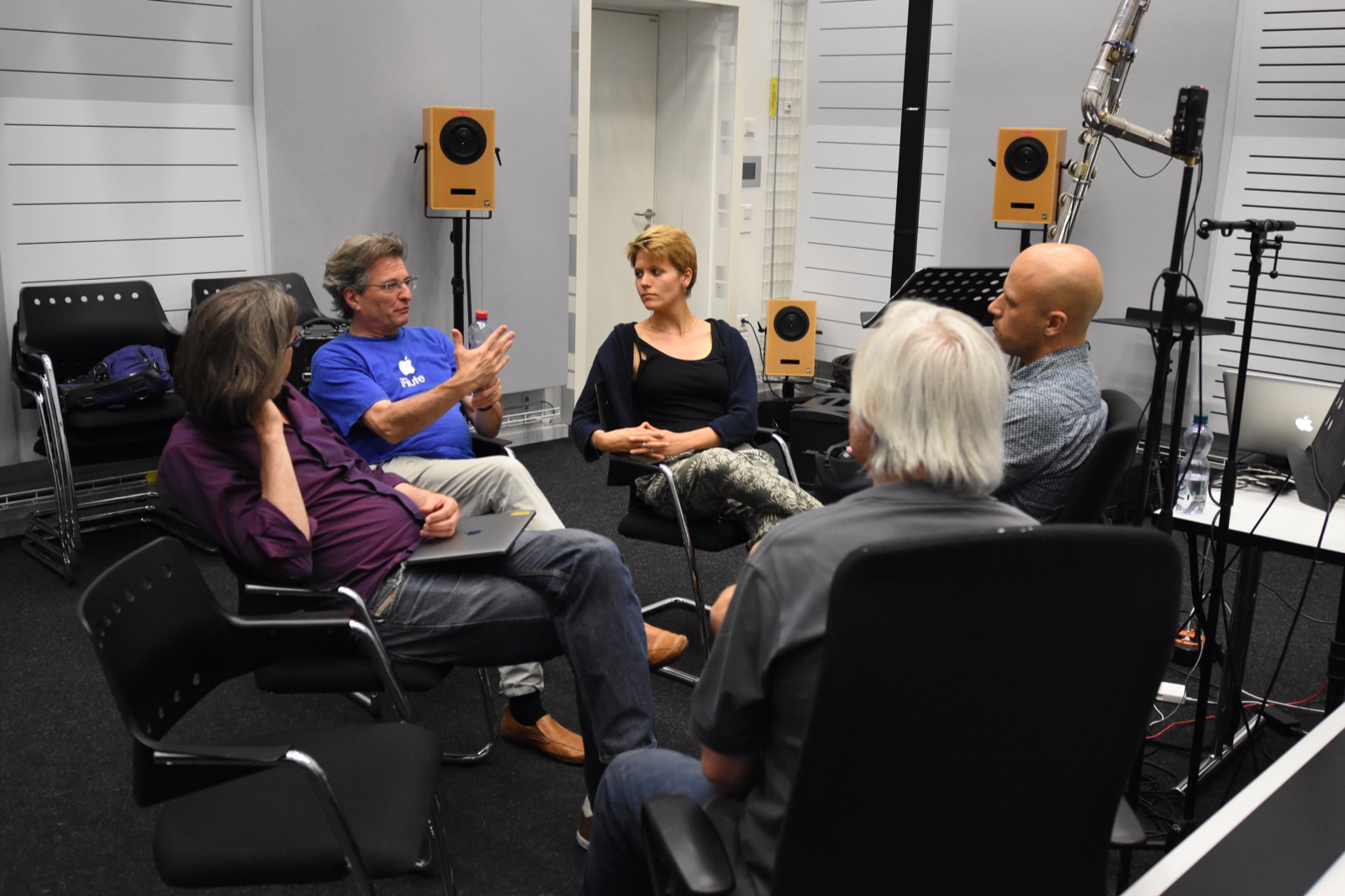
The recordings conveyed a strong sense of the surrounding space. Movement was less consistently defined: changes in position could appear abrupt, and differences in height were difficult to distinguish. Alongside live experiments with spatially positioned remote sound, these sessions helped us investigate the possibilities and limitations of spatial audio for telematic music-making.
Team
- Johannes Schütt — technical setup, audio workflow, experiment development and TPF-Tools co-development
- Patrick Müller — experiment planning, listening evaluation and documentation
- Roman Haefeli — IT, TPF-Tools co-development and server administration
- Bojan Milošević — audio setup assistance
- Joel De Giovanni — video transmission and documentation
- Matthias Ziegler — flute and experiment planning